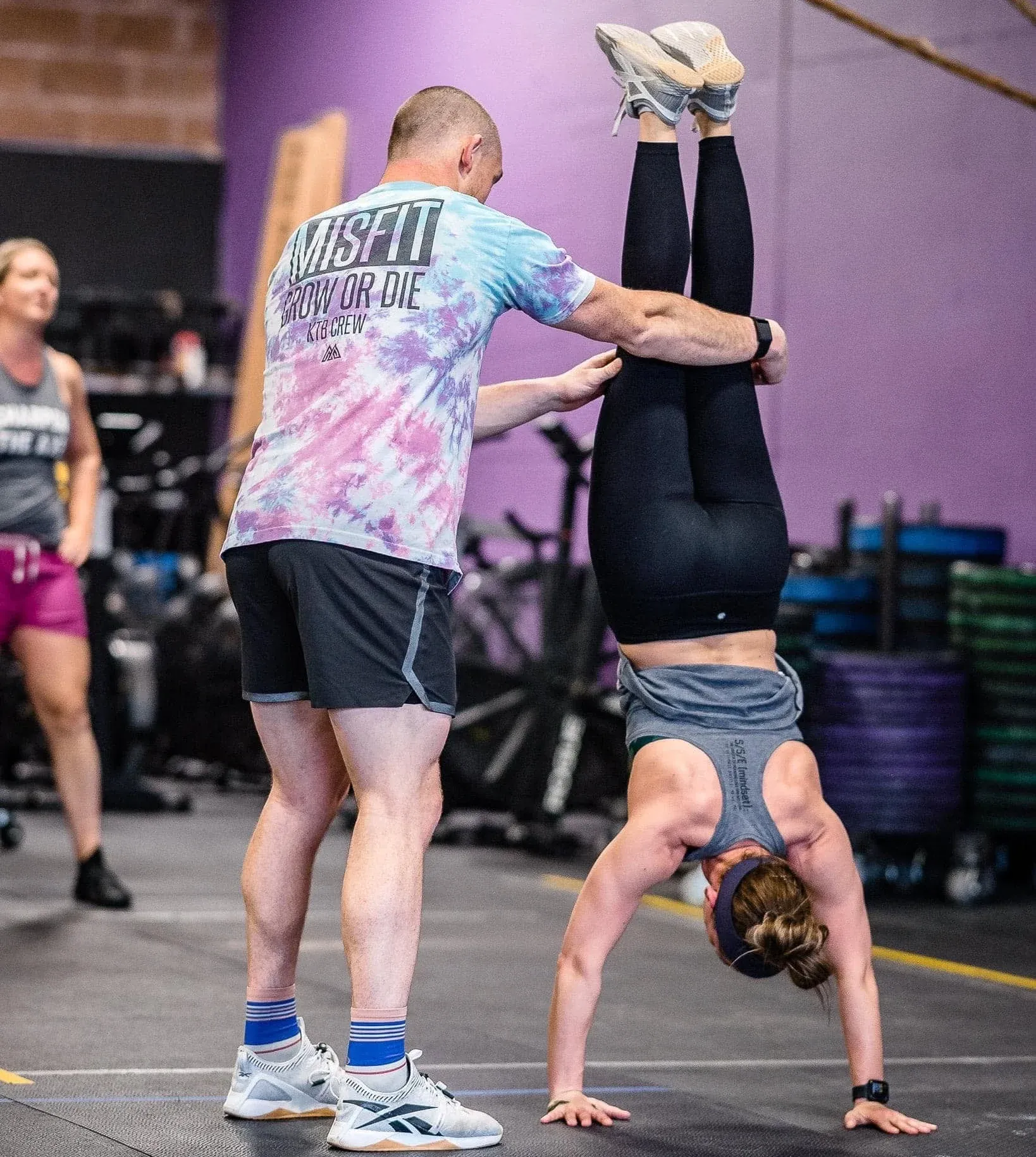
CrossFit works best when you consistently show up and embrace the variety of workouts—even the ones you may not enjoy or feel particularly good at.
Whether you’re already a CrossFitter or simply curious about trying it, CrossFit offers broad, general, and inclusive fitness. What does that mean? It means CrossFit’s specialty is not specializing. Instead, CrossFit helps you become a generalist: someone who develops the ability to perform a wide range of physical tasks.
You are not expected to be the best runner, gymnast, or weightlifter. The goal is to become capable across all three—and much more. Greg Glassman, the founder of CrossFit, described it this way:
“Develop the capacity of a novice 800-meter track athlete, gymnast, and weightlifter, and you’ll be fitter than any world-class runner, gymnast, or weightlifter.”
So how do we develop that level of fitness?
Variance.
Variance means deliberately exposing yourself to a wide range of movements, loads, and time domains. This includes cardiovascular exercises, bodyweight movements, and weightlifting; light, moderate, and heavy loads; and short, medium, and long workouts.
This approach is not random. It is intentional and designed to expose you to as many different physical stimuli as possible.
Why?
Your body adapts to the training stimuli you experience. In CrossFit, the goal is to develop the greatest degree of fitness possible. CrossFit defines fitness as work capacity across broad time and modal domains.
In practical terms, this means developing the capacity to perform a wide variety of physical tasks. Fitness gives you the freedom to do more of what you want to do.
Fitness = Freedom.
Fitness is often viewed as a physical expression of health. Another potential benefit of pursuing fitness is improved metabolic health, reflected in markers such as HDL cholesterol, triglycerides, and HbA1c. Pairing consistent training with a diet centered on whole, minimally processed foods can support these outcomes.
If you want to maximize your fitness, you need to experience a wide variety of workouts. That variety helps you develop a broader range of physical capabilities.
Sound good?
So what happens when you skip the workouts you don’t like?
You reduce the effectiveness of the program and begin to create gaps in your fitness. When you avoid something because you feel insecure about your performance or dislike being bad at it, you miss the opportunity to develop that skill.
You might think, “I don’t like burpees because I’m so slow at them,” or “I can’t climb a rope.” You might also convince yourself that a workout is not worthwhile because it is too short, too long, too heavy, or simply includes movements you dislike:
“I don’t like bike sprints.”
“It’s just L-sits.”
“I don’t like the snatch.”
Avoiding these workouts prevents you from experiencing the program as it was designed.
Why is this a problem?
Those burpees you skip? They’re a simple, highly effective full-body movement that helps you practice getting down to the ground and back up again.
That rope climb? It helps develop upper-body pulling strength and the ability to move and support your own body weight.
Those short, sprint-focused workouts? They develop your ability to produce short bursts of speed and effort when you need them—whether that means finishing a workout strong or reacting quickly in everyday life.
Those long workouts? They challenge your cardiovascular system and build the endurance to keep moving when you’re tired.
Those less familiar movements, such as the snatch and L-sit, develop coordination, balance, and strength through the hips, shoulders, and core. These qualities can help you maintain physical independence and function as you age.
Every movement in the CrossFit program is included for a reason, and each can contribute to your overall fitness and physical capabilities. You get the most out of the program by consistently showing up, embracing the day’s workout, and giving your best effort.
If you’re already a CrossFitter, that may mean accepting that some days will be difficult or that certain movements will expose weaknesses. If you’re considering trying CrossFit, it means understanding that you do not need to be fit, strong, or experienced before you begin. The workouts can be scaled to meet you where you are.
Not every day will be your best, and that’s okay. The goal is to keep showing up, keep learning, and keep improving.
Just. Show. Up.